-
Continuous Improvement
Each of us comes to work every day looking for creative ways to improve our work, company processes and interaction with others. We are passionate about improving ourselves and those with whom we work through feedback, teaching and coaching.
-
Respect
We understand that active listening is a sign of respect. We seek to understand other viewpoints before presenting our own. In the Comalli community, there is no place for yelling, insults, threats, bullying, or harassment of any kind. Period. Caring, compassion, and kindness distinguish the Comalli team.
-
Efficiency
We are tenacious in our pursuit of efficiency, always looking to streamline our products and processes to make our offerings more useful to customers. We are efficient in our interactions with each other, and respectful of each other's time. We simply don't waste time.
De-Energized Electrical Testing for Massachusetts and Vermont Facilities
Scheduled-Outage Testing & Inspection for Commercial and Industrial Electrical Systems
Some of the most revealing electrical tests can only be done when the power is off. With equipment de-energized, technicians can reach internal components, apply test voltages, and measure the condition of insulation, windings, contacts, and grounding without the risks and limits of a live system. Comalli Group, Inc. performs de-energized electrical testing for commercial and industrial facilities across Massachusetts and Vermont, using licensed electricians who plan the work around your operations.
Planning your next shutdown? Call (413) 213-3661 or contact us online to schedule a de-energized testing assessment.
What Testing with the Power Off Can Show You
Energized testing shows how a system behaves under load. De-energized testing shows how well its components hold up over time. Insulation breaks down gradually, windings drift, contact surfaces wear, and grounding paths degrade, often with no outward sign until something fails.
Facilities in Massachusetts and Vermont have good reasons to look closely. Many operate older switchgear and transformers in buildings that have seen decades of heating-season loads, temperature swings, and humidity changes. Testing during a planned outage lets you find aging components on your schedule instead of discovering them during an unplanned shutdown.
Our de-energized work helps identify:
- Insulation deterioration: Declining values can point to developing failures.
- Winding drift: Readings outside manufacturer specifications may signal a transformer losing tolerance.
- Poor contact surfaces: High resistance between contacts generates heat and accelerates wear.
- Breaker reliability concerns: A breaker that has never been tested may not trip when it needs to.
- Grounding problems: A weak ground path offers little protection during a fault.


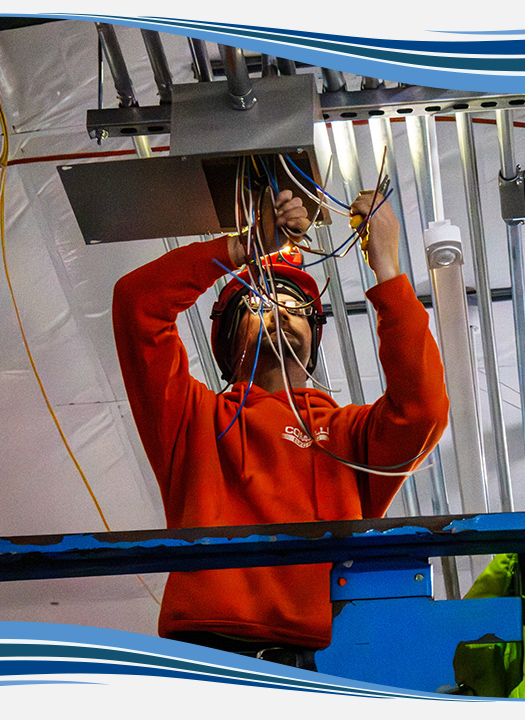
De-Energized Testing Services Performed to NFPA 70B Guidance
Each test addresses a different part of your electrical system, and together they give a documented picture of equipment condition. Our de-energized services follow manufacturer recommendations and NFPA 70B maintenance guidance, with NFPA 70E safe work practices guiding how we approach the job.
Insulation Resistance & Winding Resistance Testing
We measure and record insulation resistance under the conditions the manufacturer or NFPA 70B specifies, since insulation that has fallen below acceptable levels is a leading indicator of serious failure risk. Winding resistance readings are compared against manufacturer specifications, which helps show whether transformers are drifting out of tolerance before any outward symptoms appear.
Contact Resistance & Low Voltage Circuit Breaker Testing
Resistance across contact surfaces affects voltage drop and heat, so we measure it throughout your components. We also test, record, and document the results for applicable low voltage circuit breakers. Testing confirms whether protective devices are likely to operate as intended when a fault or overload occurs.
Ground Resistance Testing
We measure the resistance of conductors, connections, and grounding devices across your system. A grounding path that is not performing correctly can be difficult to spot without testing, and the consequences become clear only when a fault occurs.
Transformer Testing & Inspection
We measure, record, and monitor transformer condition against manufacturer recommendations and NFPA 70B standards. Transformer failures can lead to extended shutdowns and safety concerns, so tracking condition over time gives you the information to plan maintenance or replacement before problems escalate.
De-Energized Visual & Mechanical Inspection
With components safely de-energized, we inspect interior and exterior conditions in detail, looking for corrosion, rust, discoloration, leaks, physical damage, grounding concerns, safety hazards, and code compliance issues. Where adjustments are appropriate, we make them to help bring performance back within specified limits.