
-
Continuous Improvement
Each of us comes to work every day looking for creative ways to improve our work, company processes and interaction with others. We are passionate about improving ourselves and those with whom we work through feedback, teaching and coaching.
-
Respect
We understand that active listening is a sign of respect. We seek to understand other viewpoints before presenting our own. In the Comalli community, there is no place for yelling, insults, threats, bullying, or harassment of any kind. Period. Caring, compassion, and kindness distinguish the Comalli team.
-
Efficiency
We are tenacious in our pursuit of efficiency, always looking to streamline our products and processes to make our offerings more useful to customers. We are efficient in our interactions with each other, and respectful of each other's time. We simply don't waste time.
Insulation Resistance Testing for Massachusetts and Vermont Facilities
Measuring the Condition of Electrical Insulation Before It Fails
Insulation does a quiet job. It keeps current where it belongs, and when it breaks down, the first sign is often a fault, a shutdown, or worse. Comalli Group, Inc. performs insulation resistance testing for commercial and industrial facilities across Massachusetts and Vermont, using licensed electricians to measure, record, and document how well your equipment's insulation is holding up.
Want to know how your insulation is aging? Call (413) 213-3661 or contact us online to schedule insulation resistance testing.
What Insulation Resistance Testing Tells You
Insulation resistance testing applies a controlled test voltage to equipment and measures how much current leaks through the insulation. Healthy insulation resists that flow strongly. As it ages, absorbs moisture, collects contamination, or suffers heat damage, its resistance drops. Values that fall below acceptable levels are a leading indicator of failure risk, including fire and explosion hazards in the most serious cases.
Because the test is done on de-energized equipment, our team follows lockout procedures and NFPA 70E safe work practices before any measurements begin. We run the test under conditions specified by the manufacturer or NFPA 70B, which helps make results consistent and comparable from one visit to the next.
Why Massachusetts and Vermont Equipment Deserves a Close Look
Moisture and temperature swings are tough on insulation. Humid summers, cold winters, and freeze-thaw cycles can bring condensation into enclosures and wear down insulating materials over time. Many facilities in both states also operate older transformers, cables, and switchgear that have been in service for decades. Testing on a regular schedule helps you see how that equipment is aging instead of finding out during a failure.


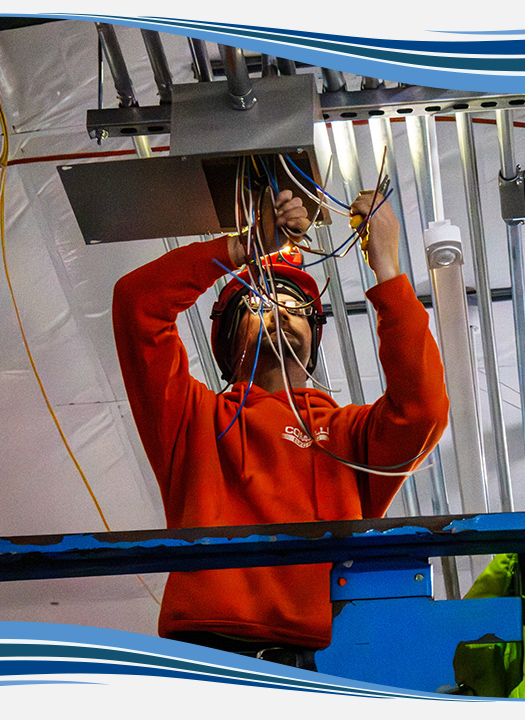
Equipment We Test and Conditions We Look For
Insulation resistance testing applies across much of your electrical system. Common test subjects include:
- Transformers: Insulation condition affects reliability and service life.
- Cables and conductors: Aging, moisture, and physical damage can weaken insulation along a run.
- Switchgear and busway: Insulation between phases and to ground supports safe, stable operation.
- Other electrical components: Disconnects, breakers, and similar devices can also be evaluated.
Results can point to conditions such as moisture absorption, contamination, thermal aging, and mechanical damage, and they give your team a number to track instead of a guess.
Trending Results to Plan Repairs and Replacements
One reading is useful. A series of readings over time is better. When we record insulation resistance on every visit, we can compare new values against earlier results and manufacturer guidance, which helps reveal equipment that is slowly declining. A transformer that reads lower each year, for example, can be scheduled for repair or replacement on your terms instead of during an emergency.
Each visit ends with a written report covering what we tested, what we found, and what we recommend. These records also support your documentation for insurance and regulatory purposes.