-
Continuous Improvement
Each of us comes to work every day looking for creative ways to improve our work, company processes and interaction with others. We are passionate about improving ourselves and those with whom we work through feedback, teaching and coaching.
-
Respect
We understand that active listening is a sign of respect. We seek to understand other viewpoints before presenting our own. In the Comalli community, there is no place for yelling, insults, threats, bullying, or harassment of any kind. Period. Caring, compassion, and kindness distinguish the Comalli team.
-
Efficiency
We are tenacious in our pursuit of efficiency, always looking to streamline our products and processes to make our offerings more useful to customers. We are efficient in our interactions with each other, and respectful of each other's time. We simply don't waste time.
Thermal Scanning That Finds Electrical Hot Spots Before They Cause Outages
Failing electrical components usually run hot long before they fail. A loose lug, an overloaded conductor, or a worn breaker can sit behind a panel cover for months, looking perfectly normal to a visual inspection while quietly heating up. Comalli Group, Inc. uses infrared thermographic imaging to make that heat visible, helping commercial and industrial facilities across Massachusetts and Vermont find developing problems and document them for repair.
Want to know what your electrical equipment looks like in thermal? Call (413) 213-3661 or contact us online to schedule an infrared scan.
How Infrared Imaging Finds Problems You Can't See
Every electrical connection resists current a little. When that resistance climbs, the extra energy shows up as heat, and a thermal camera turns that heat into an image a technician can read. A connection that looks tight and clean can still show up as a bright spot on screen, and that early warning is the point.
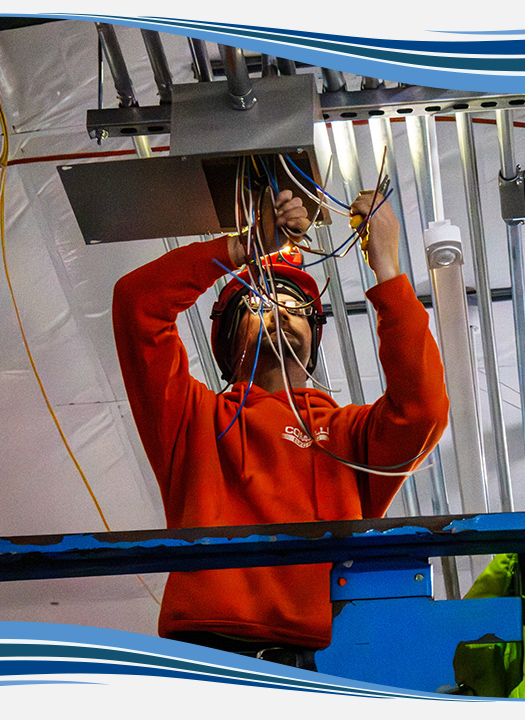
Scans are done while the system is energized and under normal load, since heat patterns only appear when current is flowing. Our licensed electricians capture images of switchgear, panelboards, disconnects, transformers, and other equipment, then compare each reading against surrounding components and expected operating conditions. The thermal equipment we use is calibrated to NFPA 70B recommendations, and our team follows NFPA 70E safe work practices while working around live equipment.
Thermal scanning is especially useful in Massachusetts and Vermont, where heating-season loads, cold snaps, and humidity swings put steady stress on electrical equipment. Many facilities in both states also run older gear in long-established buildings, which makes early detection of heat-related wear all the more worthwhile.


What Our Thermal Scans Can Identify
Heat patterns point to specific kinds of trouble. During an infrared inspection, we look for:
- High-resistance connections: Loose, corroded, or poorly made terminations that generate excess heat.
- Overloaded circuits: Conductors and components carrying more current than they should.
- Defective breakers: Devices running hotter than comparable units on the same panel.
- Failing insulation: Heat signatures that suggest insulation is breaking down.
- Uneven load distribution: Patterns that suggest phases or circuits are not sharing current as expected.
Because each finding is captured as an image with a recorded temperature, you get documentation you can act on instead of a vague note that something "looks warm."
Why a Visual Inspection Isn't Enough
A standard walkthrough can catch rust, discoloration, and physical damage, but it cannot show heat. Developing failures often leave no visible trace until they have already progressed, which is why infrared scanning is commonly paired with visual inspection. Catching a hot connection early can help reduce the risk of unplanned outages, equipment damage, and fire hazards.
Thermal Imaging Alongside Ultrasonic and Other Energized Testing
Infrared scanning is one of several diagnostic tools we use on live systems. Heat tells one part of the story, and other methods fill in the rest. Ultrasonic testing, for example, listens for corona, tracking, and arcing activity that may not generate much heat, so the two methods can catch different problems on the same equipment.
When infrared scanning is combined with voltage and current readings, harmonics analysis, and phase balance testing, your team gets a fuller view of system health from a single visit. If a scan points to a concern, we can often recommend or perform follow-up testing and corrective work.